
Kenya Launches ChildSAFE Project to Strengthen Child Protection and Family-Based Care in Six Counties
Posted by EDITORIAL
Kenya launches the ChildSAFE Project in six counties to strengthen child protection, early childhood development, family-based care and prevent violence against children.
In Summary:
Kenya has launched the ChildSAFE Kenya Project, a government-led initiative supported by the United States Department of State and implemented by Catholic Relief Services (CRS) and partners to strengthen child protection systems, promote early childhood development and prevent unnecessary family separation. The project will focus on six counties — Kisumu, Kakamega, Nairobi, Kajiado, Mombasa and Kilifi — addressing violence against children, abuse, neglect, exploitation and gaps in family-based care. It will also strengthen existing government reporting and case management platforms, including the Child Protection Information Management System (CPIMS), VuruguMapper and Child Helpline 116.
Also Read: How Kenya Marked World Prematurity Day
Kenya has launched the ChildSAFE Kenya Project, a new initiative aimed at strengthening child protection systems, supporting vulnerable families and improving the safety and well-being of children across six counties.
The project, supported by the United States Department of State through its Bureau of Global Health Security and Diplomacy, will be implemented by Catholic Relief Services (CRS) in collaboration with the Government of Kenya and other partners.
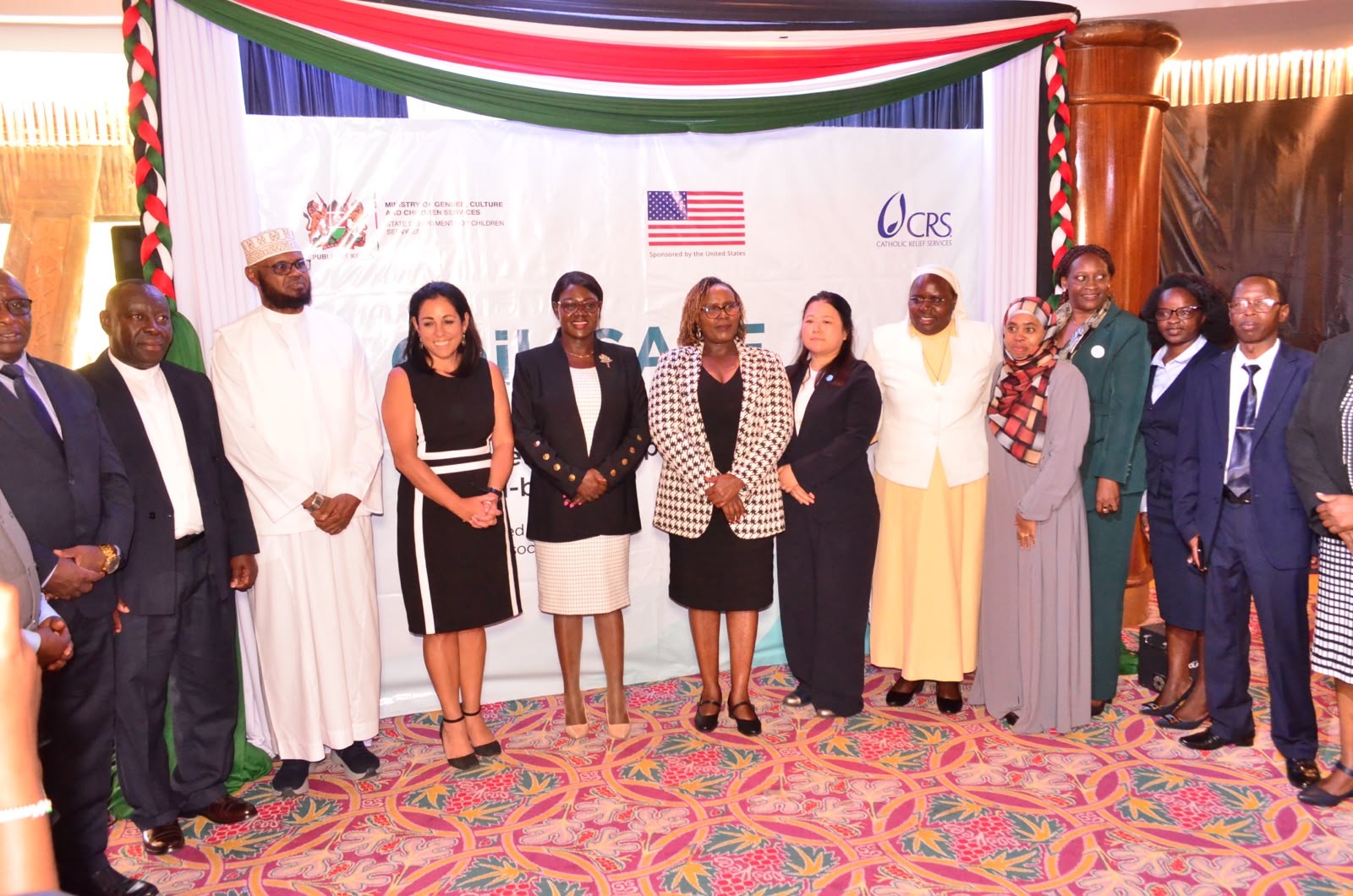
The launch brought together representatives from government ministries and agencies, development partners, faith-based organisations, civil society and child protection stakeholders to reinforce a coordinated approach to safeguarding children's rights and promoting family-based care.
Principal Secretary for the State Department for Children Services, CPA Carren Ageng’o, said the initiative aligns with the Government's national priorities on child protection, early childhood development and care reform, as well as the department's 2026/2027 financial year work plan.
She welcomed the project as a strategic partner in strengthening national and county-level child protection systems, emphasising the importance of ensuring that interventions are anchored within existing government structures.
ChildSAFE Kenya will concentrate on three priority areas: strengthening child protection systems and referral pathways, promoting integrated early childhood development and nurturing care, and preventing unnecessary family separation through family strengthening and alternative family-based care.
The project will be implemented in Kisumu, Kakamega, Nairobi, Kajiado, Mombasa and Kilifi, targeting children, families, caregivers, community structures, social service workers and other child protection duty bearers.
Its interventions will address violence against children, neglect, abuse, exploitation and unsafe family separation, while strengthening psychosocial support, referral services and community-based prevention and response mechanisms.
A key component will be improving existing government platforms used to report, track and respond to child protection cases. These include the Child Protection Information Management System (CPIMS), VuruguMapper and Child Helpline 116.
According to the State Department for Children Services, strengthening these platforms will improve reporting, referrals, case management and the use of information for evidence-based planning and decision-making.
The Principal Secretary also stressed that children's confidentiality, dignity and best interests must remain central to the management of child protection information, in accordance with Kenya's Data Protection Act, 2019.
She further called for clear institutional responsibilities, stronger coordination between government agencies and implementing partners, and investment in the professional capacity of social service workers and Child Protection Volunteers.
On care reform, the Government highlighted the importance of promoting family-based care and the safe reintegration of children from residential care institutions into families and communities, guided by the Children Act, 2022, the National Care Policy, 2025, and the National Care Reform Strategy 2022–2032.
Speaking during the launch, CRS Country Manager Margaret Kahiga said the initiative represented an important milestone in strengthening collective efforts to ensure children grow up in safe, nurturing and supportive environments.
She acknowledged the Government of Kenya's leadership, particularly through the State Department for Children Services, and thanked the United States Government for providing resources to support the initiative, which is also being implemented in eight other countries.
Kahiga said protecting children requires coordinated efforts involving government institutions, families, communities, faith leaders, development partners and children themselves.
She noted that although Kenya had made progress in strengthening child protection systems and promoting family and community-based care, challenges associated with poverty, violence, neglect, abuse, harmful practices and limited access to essential services continued to expose children to risks.
She explained that ChildSAFE would go beyond individual interventions by strengthening the systems and institutions responsible for protecting children, supporting early childhood development and helping families provide safe and stable environments.
Kahiga also highlighted the role of faith-based institutions, including churches and mosques, in child protection, noting that faith leaders and religious communities are important partners in supporting families, promoting positive social norms and safeguarding vulnerable children.
She emphasised that the success of the initiative should be measured by tangible improvements in children's lives rather than simply the number of activities completed or targets achieved.
Both the Government and CRS underscored the importance of sustainability, local ownership and institutional capacity in ensuring that the project's achievements continue beyond its implementation period.
The State Department for Children Services reaffirmed its commitment to providing policy and technical leadership while working with implementing partners to ensure that the project strengthens existing systems rather than creating parallel structures.
Through its focus on stronger institutions, supported families and community-based child protection, ChildSAFE Kenya seeks to contribute to a more coordinated and sustainable national response to the protection and well-being of children.
