
Kindiki Calls for AI-Driven Justice Reforms as Kenya Opens 4th Correctional Services Week
Posted by EDITORIAL
Deputy President Kithure Kindiki calls for AI-driven justice systems, improved offender rehabilitation and green solutions at Kenya’s 4th Correctional Services Week
In Summary
Deputy President Kithure Kindiki has called for the adoption of secure, integrated and data-driven justice systems, including artificial intelligence and green technologies, to improve correctional services, strengthen rehabilitation and protect the rights and dignity of people under correctional supervision.
Deputy President Kithure Kindiki has called for the modernisation of Kenya’s justice system through secure, integrated and data-driven technologies, urging a shift away from fragmented, paper-based processes towards more efficient service delivery.
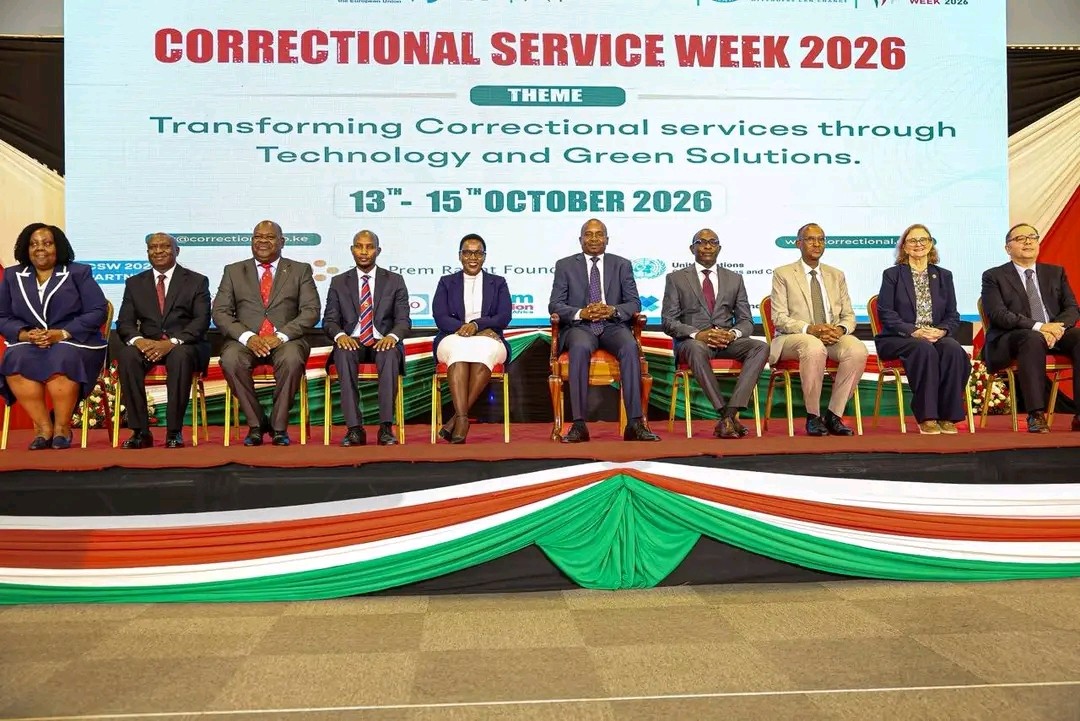
Kindiki made the remarks on Tuesday, October 13, when he presided over the official opening of the 4th Correctional Services Week in Nairobi, where the government highlighted technology, rehabilitation and environmental sustainability as key priorities for the correctional sector.
The Deputy President said artificial intelligence (AI), data analytics and other emerging technologies would increasingly shape the management of correctional facilities, particularly in operational planning, identifying service delivery gaps, strengthening rehabilitation programmes and improving the deployment of limited resources.
The proposed technological shift is expected to support more coordinated operations across the justice system while improving the ability of correctional institutions to identify challenges and respond to the needs of people under their supervision.
However, Kindiki emphasised that technological advancement must go hand in hand with the protection of human dignity, personal data and the rights and welfare of people under correctional supervision.
The call places emphasis on balancing innovation and efficiency with responsible technology use, particularly in a sector where personal information, rehabilitation outcomes and individual rights require careful protection.
Beyond digital transformation, the Deputy President highlighted environmental sustainability as another priority for correctional facilities, pointing to green solutions that can help institutions respond to current and future climate challenges.
These measures include renewable energy, water harvesting and conservation, climate-smart agriculture and tree growing, approaches that could support more sustainable facility operations while contributing to wider environmental conservation efforts.
Integrating such initiatives into correctional services would also strengthen the role of rehabilitation institutions in promoting environmental responsibility and sustainable resource management.
The 4th Correctional Services Week, which opened on yesterday, is scheduled to conclude on Thursday, October 15, 2026.
The event comes amid growing attention to the role of technology, rehabilitation and sustainable practices in improving public service delivery. The priorities outlined during the opening signal an ambition to build correctional systems that are more efficient, responsive and environmentally conscious while maintaining respect for the rights and dignity of individuals.
As the week continues, the emphasis on digital innovation and green solutions places the modernisation of correctional services within the broader conversation about accountable, rights-based and sustainable public institutions in Kenya.

