
Kenya Turns to Spray Service Providers as Rising Pest Threats Put Farmers on Alert
Posted by JIM MWANDA
Kenya’s rising pest threats are driving demand for professional Spray Service Providers as aak-GROW pushes safer, timely and cost-effective pest management for farmers.
In Summary
Kenya’s growing pest-control challenges are putting renewed focus on professional Spray Service Providers (SSPs) as a practical way of helping farmers access the right crop-protection advice and services at the right time. aak-GROW/CropLife Kenya says trained SSPs can help farmers improve pest management, use registered products correctly and reduce exposure to counterfeit or improperly applied pesticides, as new and invasive pests continue to threaten agricultural production. The association says 1,460 young farmers have so far been trained and certified as SSPs across 23 counties.
Also Read: How Rise of Donkey Skin Demand Fuels theft and Illegal Trade in Kenya
Also Read: How Kenya Marked International Coffee Day
Kenya’s changing pest landscape is increasing the need for farmers to access timely, professional and responsible crop-protection services, with Spray Service Providers (SSPs) emerging as an important link between farmers and effective pest management.
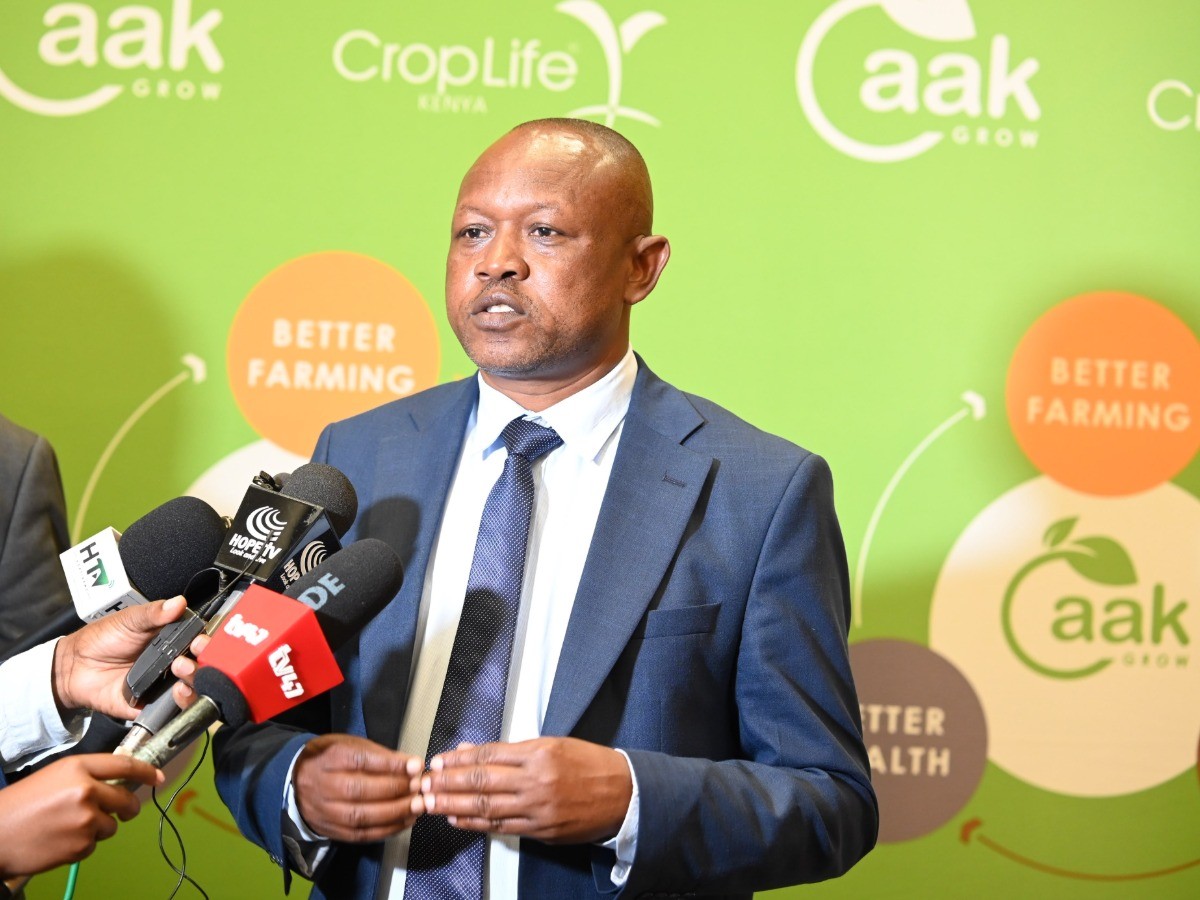
The call was reinforced during an editors’ engagement held on Wednesday, September 23, 2026, where the organization highlighted the importance of ensuring farmers receive appropriate pest-control advice, genuine products and professional application services.
For many smallholder farmers, knowing when to apply a pesticide, which product to use, the correct dosage and the appropriate period before harvesting can be difficult. This knowledge gap can result in ineffective pest control, unnecessary costs, pesticide resistance and risks to consumers and the environment.
Also Read: How Late-Blight Disease is Robbing Farmers of Billions
This is where SSPs are increasingly being positioned as a practical solution. aak-GROW describes SSPs as trained and certified farmers who provide professional spraying and pest-management services within their communities. The programme is designed to make professional application more accessible while improving adherence to recommended pesticide rates, pre-harvest intervals and responsible handling practices.
According to aak-GROW/CropLife Kenya, 1,460 young farmers have been trained and certified as SSPs, with the programme currently operating across counties including Taita Taveta, Kajiado, Makueni, Machakos, Kitui, Nyeri, Embu, Kirinyaga, Nyandarua, Isiolo, Murang’a, Nakuru, Uasin Gishu, Trans Nzoia, Kericho, Kisii, Migori, Homa Bay, Kisumu, Siaya, Busia, Kakamega, Vihiga and Bungoma.
The model also seeks to make pest-control services more affordable by allowing providers to serve farmers within defined localities, creating economies of scale while improving coordination and monitoring. Grouping SSPs around farming areas can also create a more organised system through which farmers can obtain technical support instead of independently making pesticide decisions with limited information.
aak-GROW says SSPs are trained in integrated pest management, pesticide classification, responsible pesticide use, application skills, record keeping and financial management, among other areas. Successful candidates undergo written and practical assessments before certification, while their work is supported through links with industry players, government agencies, agro-dealers, NGOs and farmer groups. Farmers contend with an evolving range of agricultural pests. aak-GROW has identified climate change and rising levels of invasive pests among the pressures increasing the importance of integrated pest management in Kenya’s food system.
The association’s pest-management work comes against a parallel challenge: the circulation of illegal and counterfeit pest-control products. During the engagement, aak-GROW Chief Executive Officer Joel Mutai said illicit products entering Kenya through porous borders can create risks for farmers, agricultural production, public health and the environment.
Mutai said enforcement agencies and industry stakeholders are working together to disrupt the movement of unregistered and counterfeit products, including through intelligence gathering and collaboration with agencies responsible for investigations, policing, border control and regulation.
The scale of the challenge is reflected in aak-GROW/CropLife Kenya’s 2025 annual report, which records 100 tonnes of illegal pest-control products valued at more than KSh70 million as having been seized or intercepted. The report also identifies Kenya’s porous borders as a vulnerability and documents collaboration involving the Pest Control Products Board, Anti-Counterfeit Authority, Kenya Revenue Authority and other enforcement agencies.
Mutai urged farmers and members of the public to become more vigilant when purchasing agricultural inputs and to ensure that pest-control products are properly registered and obtained through legitimate channels.
The Pest Control Products Board remains the regulator responsible for the registration and oversight of pest-control products in Kenya. Official regulatory information shows that products authorised for use in the country are assigned registration details and specified uses, providing farmers and other users with a basis for checking whether a product is legally approved.
For farmers, however, product verification is only one part of the equation. The correct product must also be used against the correct pest, at the appropriate time and at the recommended rate.
That is the gap SSPs are intended to help close.
aak-GROW says SSPs can help reduce pesticide resistance by promoting the correct product and quantity for a target pest, while also reducing unsafe handling by farmers. The programme also links professional application with better pest control, safer food and improved access to certification for farmers producing for export markets.
The organisation has also positioned the SSP model within Integrated Pest Management, which combines biological, cultural, physical and chemical approaches to pest control rather than relying exclusively on pesticides.
As Kenya’s farmers face new and increasingly complex pest pressures, the debate is therefore shifting beyond simply making pesticides available. The bigger question is whether farmers can access reliable technical advice, genuine products and professional application services that allow them to protect crops without creating additional risks.
For a sector increasingly affected by emerging pests, counterfeit inputs and pesticide-resistance concerns, strengthening the link between trained service providers and farmers could become an important component of a more coordinated pest-management system.

