
Do the Trees We Plant Grow?
Posted by EDITORIAL
As Kenya prepares for Mazingira Day, Plant Your Age urges citizens to take responsibility for planting, nurturing and tracking trees to maturity.
Also Read: Government Numb as Conservationists Decry of Forest Encroachment
Quote
“Do not count what you planted. Count what survived. Then come back and check.”
Kenya’s next chapter in environmental conservation should not be defined by how many seedlings are planted, but by how many trees survive to restore landscapes, support livelihoods and benefit future generations.
That is the message behind the movement, which is seeking to turn tree growing from an occasional public activity into a personal commitment. As the country prepares to celebrate Mazingira Day on October 10, the initiative is calling on Kenyans to take ownership of the trees they plant and ensure they receive the care needed to reach maturity.
Also Read: Kenya Marks Mazingira Day With a Nationwide Push for Fruit trees
The timing is significant. The Government’s national tree-growing campaign, including its emphasis on fruit trees, has placed environmental restoration and food production at the centre of Kenya’s climate ambitions. But the long-term success of that effort will depend on what happens after planting days end.
Through the Plant Your Age campaign, individuals are encouraged to grow a number of trees equivalent to their age. The idea is simple: environmental responsibility begins with a personal contribution, rather than waiting for government programmes, institutions or other people to do the work.
Also Read: Kenya Launches 10 Year Plan to restore Mount Elgon Ecosystem
Also Read: How Communities are Restoring Northern Kenya's Rangelands
A person planting trees equivalent to their age is not merely adding to a national statistic. They are making a commitment to nurture living assets that can provide food, shade, medicine, energy and income. Fruit trees, in particular, can connect environmental restoration with household nutrition, agricultural productivity and economic opportunity.
The campaign’s message is therefore about more than planting. It is about creating a culture in which people know where their trees are, who is responsible for them and whether they are still growing. That accountability is essential in a country where tree-planting figures can easily obscure the difference between a seedling placed in the ground and a tree that survives.
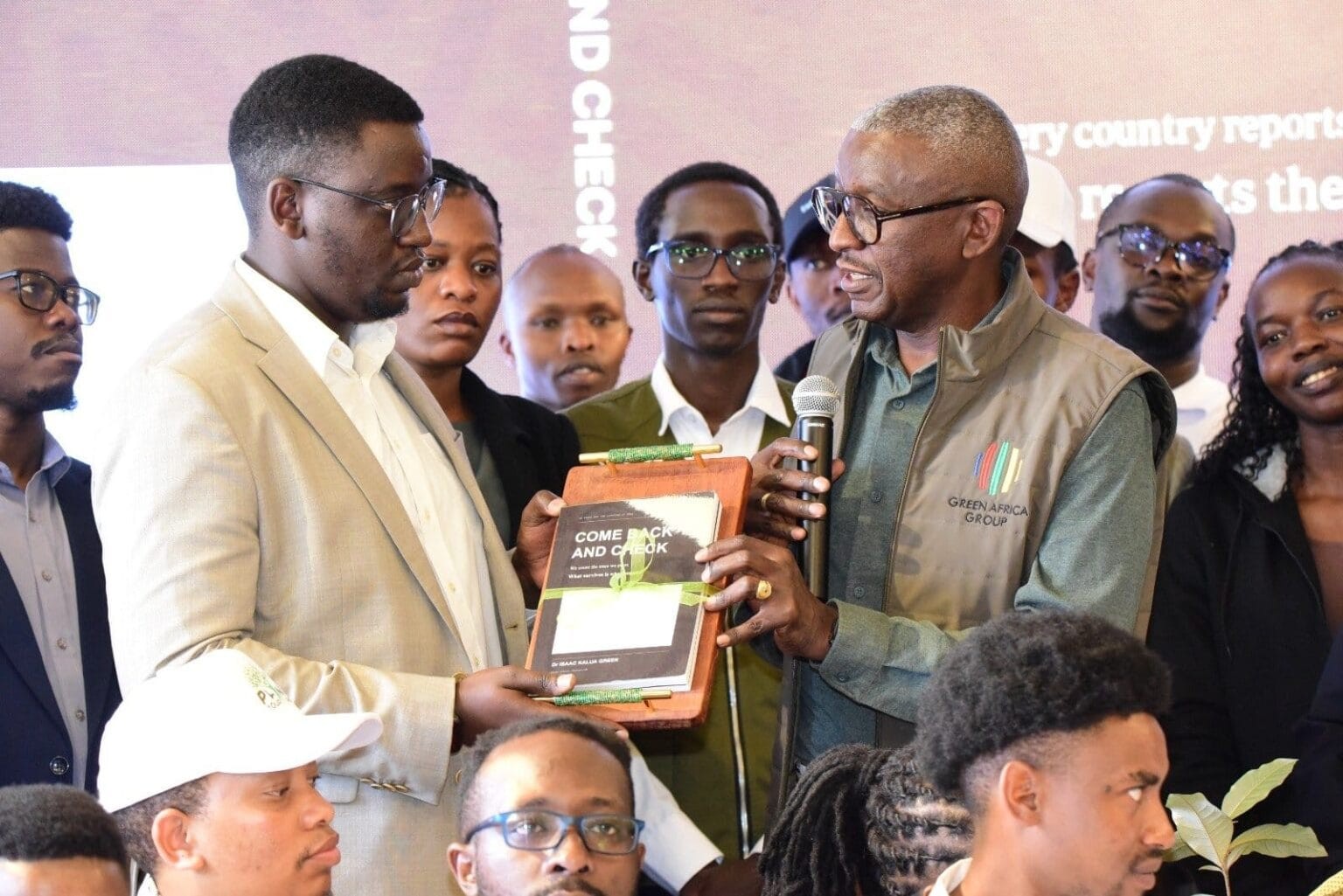
At the activation of Plant Your Age held today, environmentalist and Green Africa Foundation founder and CEO challenged Kenyans to rethink how they measure environmental progress. He argued that the country must move beyond reporting planting activities and establish systems that track survival, care and long-term impact.
His new book, Come Back and Check, develops that argument by asking what happens after the cameras leave and the planting event is over. The title captures a practical responsibility: returning to the site, checking the trees and ensuring that the work has not ended with the planting ceremony.
The approach also offers a way to strengthen Kenya’s 15 billion tree-growing ambition. Rather than treating the target solely as a government responsibility, Plant Your Age encourages citizens, workplaces and institutions to become active participants in growing and maintaining the national tree stock.
Technology is expected to support that shift. The Green Africa Foundation has unveiled the Plant Your Age web application, designed to help participants engage with the campaign and provide a more structured way of recording their tree-growing activities.
A digital platform can make individual responsibility more visible by helping people document where they plant, what they plant and whether they continue caring for the trees. When combined with follow-up and independent verification, such records can provide a stronger foundation for understanding survival rates and identifying where additional support is needed.
The application also creates an opportunity to connect personal action with broader environmental goals. If participants can record their contributions and follow their progress, tree growing becomes a continuing activity rather than a once-a-year declaration. It can encourage people to return to their planting sites, replace failed seedlings and remain involved until the trees are established.
That distinction matters because tree survival is influenced by factors such as site selection, preparation, water availability, protection and ongoing maintenance. A successful campaign must therefore account for the conditions that allow trees to grow, not simply the number distributed or planted.
The movement’s focus on personal responsibility also challenges the assumption that environmental conservation is primarily a public-sector obligation. Government has a central role in policy, financing, land restoration and enforcement, but communities and individuals are equally important in ensuring that planted trees survive.
For Kenya, the value of Plant Your Age lies in making that responsibility tangible. A person who plants trees according to their age has a clear starting point, but the real achievement is the commitment to return, care and grow them. The initiative turns an abstract national target into something that can be understood at household, community and institutional level.
As Mazingira Day approaches, the campaign offers a timely reminder that environmental restoration should not be reduced to a single celebration. Planting days can create momentum, but the lasting measure of success is whether trees continue to grow, whether degraded land is restored and whether communities benefit from the results.
Advertise with JLC News Global Here
The launch of the Plant Your Age web application and Come Back and Check places that message at the centre of the movement’s next phase. Together, they reinforce the need for a culture of planting, nurturing and returning to assess progress.

